Diethylene Glycol
Clear, hygroscopic Diethylene Glycol (DEG) liquid, soluble in water, used as a solvent, humectant and intermediate.
PRODUCT DETAILS
DIETHYLENE GLYCOL (DEG) 225KG – A VERSATILE SOLVENT AND KEY INTERMEDIATE
Diethylene Glycol (DEG) is a clear, hygroscopic, odourless liquid with two hydroxyl groups that readily participate in many chemical reactions. DEG is widely used as a solvent, humectant and chemical intermediate across industries.
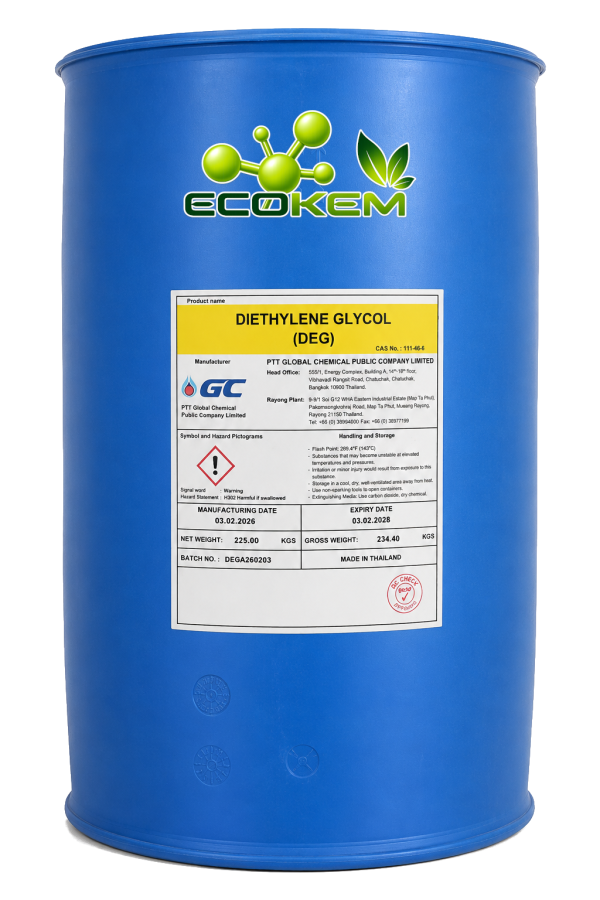
PRODUCT INFORMATION / Introduced packaging: 225 kg/drum (Thailand). The product is a clear, hygroscopic liquid. Acceptance criteria must be based on the COA of the actual batch delivered.
1. What Is DIETHYLENE GLYCOL (DEG) 225KG?
Diethylene Glycol (DEG) is an organic compound with the formula C4H10O3, produced by the reaction of ethylene oxide with ethylene glycol. Thanks to its two hydroxyl groups, DEG is highly soluble in water and many organic solvents, and serves as an intermediate for numerous chemical derivatives.
2. Product Identification and Technical Data
| Property | Information |
|---|---|
| Product name | Diethylene Glycol (DEG) |
| Alternative spelling | DEG |
| Common names | 2,2-Oxydiethanol; Diglycol |
| Chemical formula | C4H10O3 |
| CAS No. | 111-46-6 |
| EC No. | 203-872-2 |
| Molecular weight | 106.12 g/mol |
| Appearance | Clear, hygroscopic liquid |
| Odour | Practically odourless |
| Solubility | Soluble in water and many organic solvents |
| Packaging | 225 kg/drum |
| Origin shown on packaging | Thailand |
2.1. Typical Commercial Specifications
| Parameter | Typical reference |
|---|---|
| Purity | ≥ 99.5% |
| Moisture | Commonly ≤ 0.1% |
| Specific gravity (20°C) | 1.115 – 1.119 |
| Boiling point | 242 – 250°C |
| Flash point | ~143°C |
| Melting point | -10°C |
| Colour (Pt-Co) | ≤ 10 |
| Acidity (as acetic acid) | ≤ 50 ppm |
| Other parameters | According to batch COA |
TECHNICAL NOTICE / The values in this document are provided for reference only and do not replace the TDS, SDS or COA. Acceptance must be verified against the documentation of the actual delivered batch.
3. Key Features
- Two hydroxyl groups enable easy esterification, etherification and derivative formation.
- Good hygroscopicity, suitable as a humectant and drying agent in selected processes.
- Excellent solubility in water and many organic compounds.
- Liquid form is easy to pump, dose and blend.
- The 225 kg/drum packaging suits manufacturing and distribution.
4. Applications
4.1. Chemical Production and Intermediates
- Raw material for polyester, polyurethane and thermoplastic resins.
- Production of esters and chemical derivatives from its hydroxyl groups.
- Use in plasticisers and surfactants.
- Raw material for antifreeze and technical fluids.
- Blending in industrial solvent systems.
4.2. Solvent and Humectant Applications
- Solvent in paints, inks, adhesives and cleaning agents.
- Humectant in textile, leather and paper processing.
- Component of antifreeze and cooling fluids.
- Extraction solvent in selected pharmaceutical processes.
4.3. Laboratory and Research
- Laboratory solvent, sample preparation and small-scale organic synthesis.
5. Instructions for Use
- Use according to the technical guidance and recommended parameters of the manufacturer.
- Blend only with materials whose compatibility has been assessed.
- Perform compatibility and small-scale tests before full-scale production.
- Check shelf life, container condition and labels before use.
- Do not mix with incompatible chemicals without a technical assessment.
6. Safety, Storage and Transportation
- Wear gloves, safety goggles and protective clothing when handling DEG.
- Work in a well-ventilated area and avoid prolonged skin and eye contact.
- Store in a dry, cool warehouse; keep drums on pallets and away from direct sunlight.
- Keep containers closed to prevent moisture absorption.
- Separate from strong oxidisers and incompatible chemicals.
- Do not discharge large quantities into drains, surface water or groundwater.
- Protect cargo from rain, secure the load and keep labels intact.
- In case of eye contact, rinse with clean water for at least 15 minutes. If swallowed, do not induce vomiting and seek medical attention.
7. Selection and Acceptance Criteria
- Verify the COA of the actual delivered batch against the technical requirements.
- Check appearance, colour, clarity and visible impurities.
- Check container condition, seals, labels and traceability information.
- Review the SDS for storage and emergency handling.
- Check homogeneity, water-insoluble matter and batch-specific parameters.
8. Frequently Asked Questions
• What is the CAS Number of Diethylene Glycol?
The CAS Number of the product is 111-46-6.
• What is the chemical formula?
The chemical formula of the product is C4H10O3.
• Is Diethylene Glycol soluble in water?
Yes, DEG is highly soluble in water and many organic solvents.
• What packaging is available?
Packaging and net weight per container are shown on the label and batch COA.
• Can it be blended with other solvents?
Compatibility tests should be performed before large-scale blending.
• Does it require special storage?
Store in a dry, cool place, away from heat, flame and direct sunlight.
• Can industrial grade be used in food or cosmetics?
Only use grades certified for the intended application and meeting legal requirements.
• What if the quality of a batch is in doubt?
Contact the technical team, compare with COA/SDS and keep a sample for inspection.
3T CHEMICAL COMPANY LIMITED
Dear Valued Customers, are you looking for reliable chemical sourcing solutions?
Please contact 3T Chemical for consultation on suitable products, packaging specifications, COA/MSDS documentation, and appropriate delivery solutions.